Saturday, February 28, 2009

Banff, Scotland

My day started with a two hour meditation, Mindful Ecology; this included a walking meditation thru the Cullerne Gardens and was a great way to start a day off from classes.

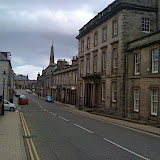
After that, a couple of my new friends for EVT, Avril (from Wales) and Hasmik (from Switzerland) & I drove (Avril has a car) to the town of Banff. It was really great just getting away for a couple of hours and to see some more of the North Scotland coastline. The other great thing was too spent time getting to know these individuals and learning about the lives of these new friends.

Banff, Scotland

The End of Fair Share Week

This week was tremendously enlightening on the challenges faced by our societies and how we successfully transition through some difficult times ahead; peak oil is a major contributor to many of the challenges we face. How will small to medium sized organic farmers be able to make a living if they cannot sell produce at a price that allows them to stay in business?

The time we spent with Pam & Nick up on their farm was a wonderful experience, and that experience for EVT participants might not be able to survive if things do not change, with the downturn of the world economies the more costly organic produce is being left in the fields due to lack of available customers, whom are buying from the multinational chains, products that are grown using petro-chemicals (oil-based fertilizers and insecticides) and not buying local organic produce (no fertilizers or insecticides and ono long distance transportation). The large multinationals are also creating monoculture agriculture, where only one type of crop is grown in a region, we must have diversity in our ecologies and farms to allow for long-term health of the earth, animals, plants, and human beings.

Buying Local produce is really something that we all must start doing, the less we transport our foods the better we are in the long run. My friends Ann & Richard in Carmine are starting up a Community Supported Agriculture scene, this is what we need to do, positive actions like theirs, I hope that I will be able to assist them in their success.

We just need to take notice of where the products we consume are produced and be aware of all the steps that required to produce, package, and ship the product.

How much water does it take to produce a liter of Bottled water? think about the process of making plastic, etc.

The Pacific Institute estimates that in 2006:

* Producing the bottles for American consumption required the equivalent of more than 17 million barrels of oil, not including the energy for transportation
* Bottling water produced more than 2.5 million tons of carbon dioxide
* It took 3 liters of water to produce 1 liter of bottled water

We need to protect our water resources, especially in Texas. Thanks to friends like Vicki Blachman, whom is totally engaged in rain harvesting and getting the rain-harvesting message out in to the communities, actions are being taken. And more can be done, in protecting our water quality.

Kulture Kitchen

Thursday afternoon was a chaotic, fun, creative time for all of the participants to make vegetarian dishes from that would be considered cultural food from the regions they come from. Hanna & Zoe were our Findhorn assistance and in many cases mentors, that help most of us get thru the afternoon. We had four hours to make 25 different dishes & deserts on 8 stove burners and three ovens, it was really a blast and we did a pretty good job, I think we had the food ready by 6:10pm (we were 10 minutes late).

This is a big event in Findhorn during EVT, the EVT dinner, probably 125 people turned out to eat the creations, and everyone had a great time and were very complementary of the food.

My dish, well it wasn't from Texas but close, Vegetarian Jambalaya.

Kulture Kitchen

Wednesday, February 25, 2009

EarthShare and the farm on the hill

Today started with a walk, breakfast, and meditation.

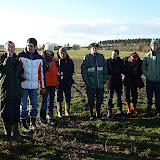
We all jump into a couple of Findhorn buses and went about four miles as the crow flies up to a farm to do some work this morning @ EarthShare. The farm is actually two working farms that cooperate with each each, rotating fields between the crops that EarthShare uses to grow organic vegetables that provide for about 2000 families via a "garden box" program and Nick & Pam's farm that uses the fields to produce grain for their sheep, milk cows, and chickens.

Once we got on the field we do our normal "tune in", e.g. we use this group tool all the time before we do any job - just taking the time in the group to join hands feel our surroundings and visualize the task at hand, how much fun it is going to be, and then off we go.

We split up into several different groups, potting chives, picking carrots, sorting potatoes, or in my case I picked cabbage. There was also a group that had to tend to a minor disaster and move 150 sacks of potatoes.

When we first got to the farm it was sunny and windy, but pleasant working conditions. Within the hour, the clouds and rain moved end, but we all were able to finish our tasks, relax in the hay for a bit and then "tune out", e.g. join hands and reflect and the good job that was done and appreciate all the folks that allowed this to happen.

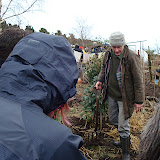
We then went to the farm house and talked with Nick, who was proud to show off a new arrival, a calf that was born this morning at 8am and was doing very well. The sell the eggs, wool from their sheep (their sheep are white, brown, white, & gray) is spun and knitted in to garments by local weavers using the natural wool color, and cheese (natural unpasteurized traditional Scottish cheese) from the cows milk. The cheese is about 80% of the farms income and it is very, very, very good cheeses, two types one was sweet milk, but the other escapes me.

Even with all of this going for this farm, on 90 acres (or about 30 hectares) they are struggling to make it. Most farm land is not owned by the farmers on them, this is a major expense and it limits what changes that can be made to the property that could greatly benefit the farm by using permaculture techniques to improve the surrounding ecology. Pam is one of four natural cheese makers operating in Scotland, the main reason is due to the over bearing regulations that have been placed on these types of producers. The average age of farmers/producers/craftfolks in Scotland is 57 years old.

What will our societies do once these practices are no longer part of our ways of life, providing individuals, our children & grandchildren with foods with the superior nuturing foods. These community supported farms also provide a place for community in sharing some of the activities required to operate a farm, e.g. clearing fields of detrimental weeds by hand (no petro-chemicals!).

Great experience, but it tears you up and is frightening to think about this type of loss.
EarthShare Farm

Monday, February 23, 2009

Week Two: Fair Share Week

Sunday was the beginning of a different subject that is certainly relevant in today's world, the lack of sustainability in today's global economy. A cute little video that was shared with us on The Story of Stuff was both entertaining and presents worthwhile concepts on the production of goods and food.

We will be in classes that show us how today's money works (Money as Debt), if you click the link and watch the video, I am not sure I am in tune with all that is said, but there are some interesting points. But we will basically be working to make money our servant not our master.

We will look at different models of sustainable economies, some of these are promoted by the United Nations in conjunction with GEN. Some of these are straight forward such as localvores (eating locally grow foods) others longer term such as changing from ecology from a subset of the economy to a economy that is a subset of ecology.

We will discuss how social activism is a part of this, how we must engage outside of our comfort zones, "within the edges" where old & new concepts meet, in order to change the social fabric. How do we turn dreams into real initiatives.

Saturday, February 21, 2009

Saturday Morning

Each Saturday is our free day, a day without class. After the first week, I was looking forward to some time to myself. When you are participating in a group activity of this length (or even a couple of days long) you need to make sure you give time to yourself away from the group to help process any group dynamics that influencing/developing within you, either positive or negative, so that you can clearly express these to the group if needed.

My time away on Saturday started with a walk out to the edge (Edges are an interesting part of permaculture), the boundary between Findhorn and the RAF base and then I walked to the village of Findhorn, to a bakery/cafe to have a little coffee & pastry.

I was assigned to stay in the Guest Lodge with 13 other participants, we are the largest group of participants in a single dwelling. We are from the Brazil, Switzerland, Germany, France, UK, Ukraine, and US. We had house cleaning duties today, so I when I returned from my walk, I did my vacuuming (or as they say here, hoovering) task.

I think I will spend some time down in Craig's permaculture patch this afternoon, it was pretty enjoyable yesterday.

Here are some photos of the walk.
Findhorn Beach

Friday, February 20, 2009

Bringing Week One to a close

Started today with meditation, ended it with a great Scottish Ceilidh. The Ceilidh was a lot of fun and everyone seemed to enjoy learning the dances and it got everyone's heart rate up.

The week has been pretty wearing for all the participants, we are each finding that the amount of head and heart work that we have done this week has worn us out a bit. So, we are ready for a break, which we get tomorrow. Today we did get out in to Craig's permaculture patch which was an activity that everyone enjoy, it was physical, yeah! Tomorrow is a new day, who knows what I will do, most likely a long walk along the beach for one thing.

Craig Gibsone is a hoot, 67 and still going strong. His permaculture is wild and free form; it seems to work really well for him & his family.
Craig's PermaCulture Patch


I have been pretty lame about posting pictures from Findhorn, so here are a few to look at.
Findhorn Foundation etc.